

You’ve come across ChatGPT and AI Enthusiasts have convinced you that you ought to be cautious about the security of your new interest/career, and frankly, they aren’t entirely wrong. It’s natural to feel a bit anxious in this rapidly evolving field, but it’s important that you realize the state of AI right now, its capabilities, and the nuances that come with software engineering. I’ll also share my perspective on the matter and why you should do less worrying, and more programming.
Understanding and Addressing New Developer Anxiety
It’s completely normal to feel overwhelmed, intimidated, or even a bit fearful as a new developer entering the world of software engineering, especially with the rapid advancements in AI. Remember, every expert was once a beginner. The field of technology is vast, and no one knows everything. Embrace the journey of learning and growth. It’s okay to not have all the answers; seeking help and collaborating with others is part of the process. Your unique perspective and fresh ideas are valuable assets to the industry. As you gain experience, these feelings will transform into confidence and expertise.
Software Engineering Is NOT Just About Coding
As a young engineer and novice programmer, it’s important to understand that the sheer complexity of software engineering extends far beyond simply coding. Feelings of being daunted by the massive scale of this field are normal, but they are also a sign of your understanding of its depth. It involves maintaining huge codebases with millions of lines, documenting and comprehending the program’s requirements to meet the needs of end-users and stakeholders, and performing maintenance. This includes patching bugs, rolling out updates, ensuring compatibility with new systems and hardware, and writing high-quality tests. And while AI can automate making tests, it’s human judgment that remains and will continue to remain highly valuable in deciding which areas need more testing based on potential risk and trade-offs.
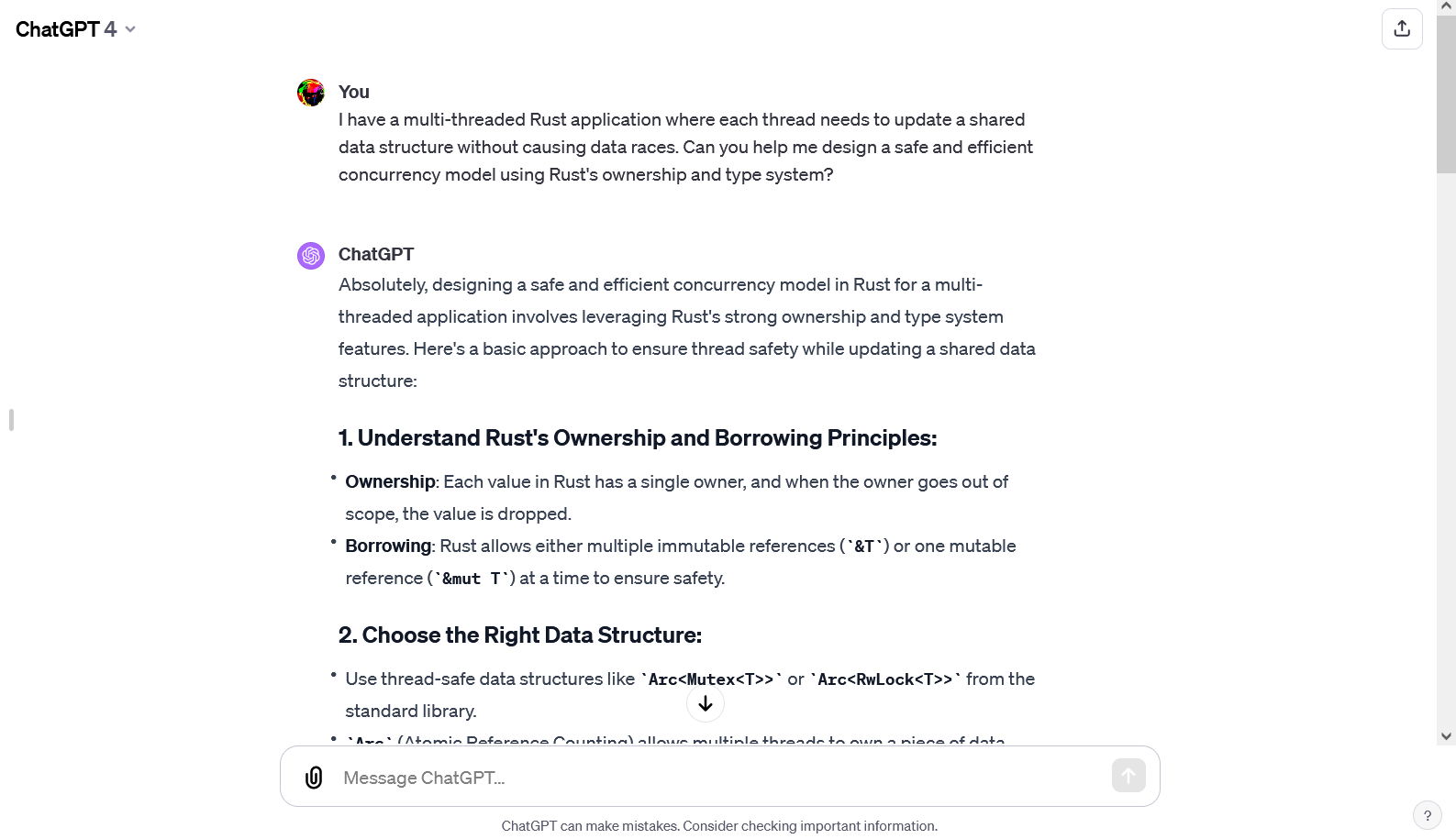
Right Now GPT 4 is the most powerful language learning model (LLM) available to the public. You most likely have heard of GPT 4, and you probably use it, I sure do. It is incredibly helpful when breaking down concepts, complex code, or generating quick snippets of code for things I may be too lazy to write. I love ChatGPT and I pay for the subscription because it yields value to me. Despite this, it is not a replacement for a junior engineer (yet). It’s a non-expert tutor that doesn’t get annoyed by endless questions. The more I use ChatGPT, the more I realize how little it really knows about software engineering. It’s okay to have moments of doubt about how much AI like ChatGPT can replace human intelligence. Again, don’t get me wrong, it’s an incredible tool, but it has some weak points.
 GPT 4 / OpenAI
| Weak Point | Description |
|---|---|
| Lack Of Memory | Memory limitations or inability to retain past interactions effectively. |
| No Understanding of My Environment and System | Inability to directly perceive or interact with the user’s physical environment or computing system. |
| Inability to Comprehend Obscure Documentation | Difficulty in understanding poorly written or highly technical documentation without context. |
The last point resonates with me a lot. I was trying to get ChatGPT to help me with a GUI library in Rust. There was 0 documentation besides docs.rs and code examples (which in my opinion is a lazy replacement for documentation). I downloaded the entire docs.rs page for the library and fed it into ChatGPT piece by piece and despite this, it still couldn’t figure out how to help me make a custom widget. This is where the disconnect happens between AI Enthusiasts and engineers/non-AI Enthusiasts. Software engineers who actually write, test, and distribute software, and also use tools like ChatGPT realize these limitations and issues. But AI Enthusiasts who had ChatGPT write them a half-baked ping pong game in Python think that’s it and we are to be automated within the year. It’s understandable to feel a little insecure or worried about these predictions, but I want to highlight that these limitations and issues are not things that can’t be fixed. Telling people their jobs will be automated by GPT 4.5 “Make up random libraries and borrow the borrow checker from the borrow checker with the borrow checker (Rust joke, unfunny I know)” is absurd and does nothing but cause panic! (pun intended :]). On the contrary, if all you know how to do is code, you will find yourself outpaced in the future, as engineers who can code and use AI tools will render you obsolete. So pick up these tools, learn them thoroughly and understand their limitations. Most importantly though, expand your skillset outside of coding. Read a book about software design and architecture (Computer Systems: A Programmer’s Perspective - One Of My Favorites), deepen your knowledge in database management and optimization, learn how to write automated tests, scale infrastructure, and practice the best security patterns.
Translating Ambiguity and Business Requirements into Clarity
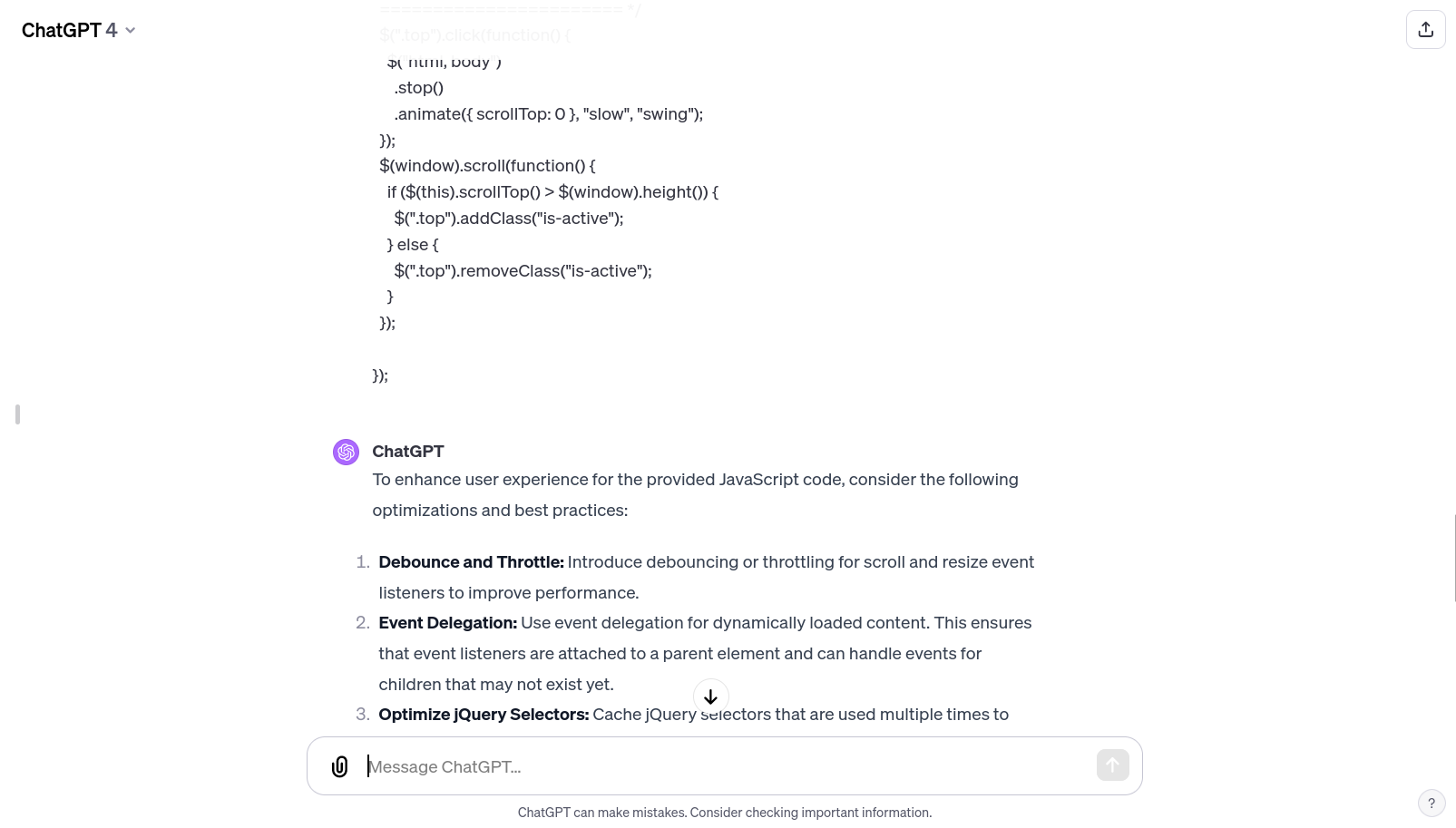
Oftentimes as an engineer, you’ll be given a ticket with a vague request or feature addition. For example, your product manager or higher-up might say, ‘Enhance User Experience,’ with no additional context whatsoever. What exactly does enhancing user experience mean? This is a prime example of something AI currently cannot do. Current AI does not seem to possess the ability to process ambiguity. Test it out. If you ask GPT-4 to ‘Enhance’ the user experience and provide a snippet of code, it typically won’t seek clarification or additional context. Instead, it attempts to generate a plausible response based on its training, which might include suggesting new features that could, in theory, enhance the user experience. However, these suggestions may not always align with the specific business needs. It’s important to recognize that, despite its sophistication (trigger warning for AI enthusiasts), GPT-4 is fundamentally a text generation tool. It lacks true comprehension and the ability to ask follow-up questions; it makes no effort to try and understand your request. That’s because it doesn’t. It’s simply giving you what sounds good. It’s quite telling that AI Enthusiasts prop these tools up to be things they aren’t, and actual Machine Learning Engineers and researchers aren’t. Well apart from the researchers at OpenAI. But keep in mind this is a business and it’s in their best interest to hype their niche.
 GPT 4 / OpenAI
I do not claim to know everything about AI and I’m not going to educate you on it. But I urge you to educate yourself on AI, understanding how it works will provide with better all-around knowledge so you are able to come down to your own conclusions on new developments or community activity. Instead of being swayed by those who engage in speculative discussions and claim that your job will be replaced and AGI (Artificial General Intelligence) is next year. It’s normal to feel uncertain or swayed by these discussions, but grounding yourself in factual knowledge and continuous learning is key.
By the time software engineers can be fully replaced by AI (I am a strong believer we would need AGI at the very minimum to achieve this), then every other job would also be replaced. The trades are safe until robotics catches up, and they aren’t too far behind. So realistically, you might have a few extra years after all the white-collar jobs are replaced, but blue-collar jobs are next up on the chopping block. My message to you is: do less worrying and more engineering. The feeling of empowerment comes from taking proactive steps in your career and personal development.
Personal Accounts From A Scared Developer
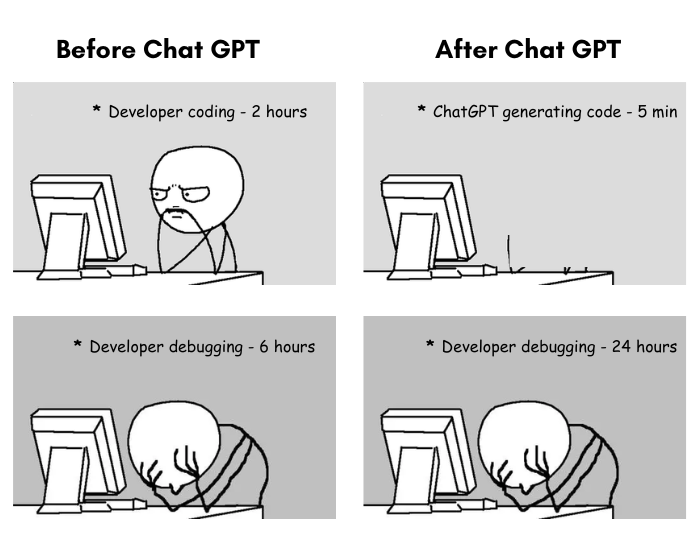
I wasn’t always “fearless” of AI, I was also frightned by it, especially considering my age i thought welp, i guess ill be out of a job soon right?
Oh the debugging
Stop reading this and develop software.
Remember that in our ever-evolving field, adaptability is key. Stay open to continuous learning and keep pace with emerging technologies—but don’t feel pressured to use them. Collaboration and creative problem-solving remain at the heart of software engineering, and these are areas where humans excel. Embrace your anxieties as a sign of your commitment to growth and learning.
Don’t underestimate the importance of soft skills like communication, empathy, and critical thinking—they are irreplaceable assets in your career. Embrace mentorship and knowledge sharing to nurture a supportive community within our profession. And always remember to focus on personal growth and well-being, as a balanced life enhances your creativity and job satisfaction.
So, my message remains unchanged: do less worrying and more engineering.
 Meme / Debugging LLM Hell Code